
AI & Automation
Before adding an AI chatbot, prepare the answers it can use
Prepare an approved knowledge base, escalation rules and test questions before planning a business AI chatbot.
List the questions that repeat
A business chatbot needs more than an appealing welcome message. Start by collecting the questions people actually ask: service scope, delivery steps, booking changes or how to reach a person. Group repeated questions, then identify which answers already exist and who can approve them.
Do not fill gaps with plausible policy. If a refund rule, price or service area is unsettled, that uncertainty belongs in the preparation work.
Make the knowledge base maintainable
Give each approved answer a source and an owner. Separate public information from internal notes. A customer-facing assistant should not gain access to every document simply because connecting an entire drive is convenient.
Record what needs updating when services change. An accurate answer today can become misleading after a new price or process is introduced. A smaller collection of maintained answers is easier to inspect than an unstructured archive.
Define when the assistant should stop
Specify when to offer a human handoff: missing information, conflicting sources, a complaint or a request outside the approved scope. Preparing an answer and making a commitment are different actions.
A useful hypothetical test is a customer asking for an exception that nobody has approved. The expected behavior might be to explain that a person must review it, without promising the exception.
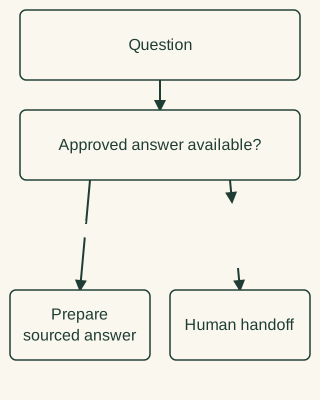
Question → Approved answer available?; Yes → Prepare sourced answer; No or conflicting sources → Human handoff
Test before widening access
Use questions with known answers alongside ambiguous and out-of-scope requests. Check whether the draft answer matches its source and whether escalation works. Keep a record of corrections and unresolved cases.
MarketMerit's knowledge-assistance work is in development. A proposed chatbot project would need a defined information boundary, an agreed pilot and clear ongoing ownership before live deployment.