
Branding
Brand strategy and logo design: what should your project include?
Understand how brand strategy, messaging and visual identity relate, and prepare a clearer brief for a branding project.
Name the problem before naming the deliverable
A request for a new logo can point to several different problems. The business may look inconsistent, its audience may not understand the offer, or existing artwork may fail on small applications. Those problems do not all require the same work.
Describe what feels wrong and where it appears. This helps distinguish a focused design task from a broader brand-development project.
Connect direction, language and appearance
Brand strategy considers who the business is trying to reach, what it offers and how it wants to be understood. Messaging expresses that direction in words. Visual identity translates it into elements such as a logo, colour and typography.
These elements should support each other, but they are not interchangeable deliverables. A logo file does not explain the business positioning, and a strategy document does not replace usable artwork.
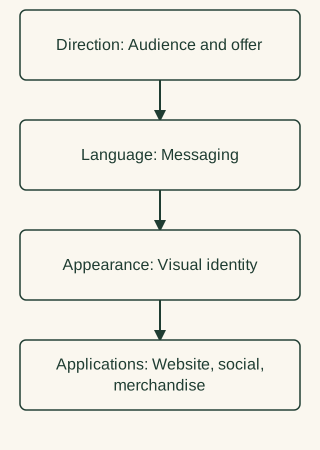
Direction: Audience and offer → Language: Messaging → Appearance: Visual identity → Applications: Website, social, merchandise
Plan for the places the identity must work
List actual applications: a website header, social profile, uniform, packaging or merchandise. Each can introduce practical constraints. A design that looks good at presentation size may need adjustment for a tiny avatar or a restricted production method.
Ask the relevant producer for specifications before calling artwork production-ready. A mockup helps communicate an idea; it does not establish that a supplier can reproduce it exactly.
Make approval and handover explicit
Choose who makes the final decision and how feedback will be consolidated. Agree which files and usage notes are included. Keep selected directions distinct from exploratory concepts so future collaborators know what they can use.
MarketMerit's own story includes selected identity refinements. It illustrates that a brand takes shape through decisions, without suggesting every project should use the same visual style or sequence.